

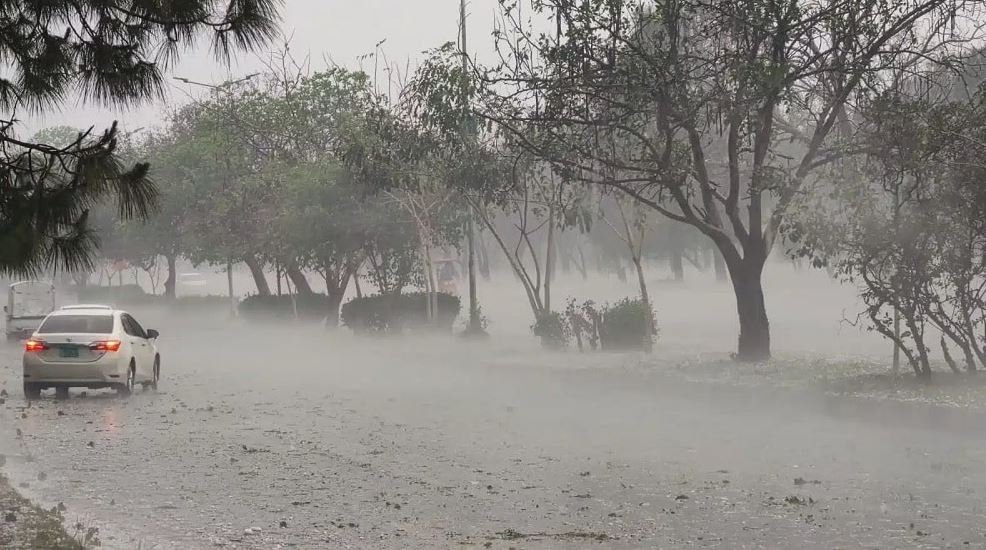
ISLAMABAD; Pakistan’s NDMA has issued a nationwide weather alert for a critical 12- to 24-hour window of heavy rains, thunderstorms, strong winds, dust storms, and associated risks like flash floods, urban flooding, landslides, and Glacial Lake Outburst Floods (GLOFs).
This advisory, issued around June 20-21, 2026, via the National Emergencies Operation Centre (NEOC), emphasizes proactive preparedness by federal, provincial, and district authorities.
Rainfall with thunderstorms is likely in Punjab and Islamabad areas including Rawalpindi, Murree, Attock, Chakwal, Talagang, Mandi Bahauddin, Sargodha, Gujar Khan, Gujrat, Jhelum, Sialkot, Gujranwala, Hafizabad, Lahore, Faisalabad, Khushab, Jhang, Mianwali, Dera Ghazi Khan, Kasur, Okara, Sahiwal, Multan, Bahawalpur, and Rahim Yar Khan, where urban flooding is a key concern in low-lying or poorly drained urban zones.
In Gilgit-Baltistan and Azad Jammu & Kashmir, thunderstorms and rainfall are expected in places like Gilgit, Skardu, Diamer, Astore, Hunza, Neelum Valley, Muzaffarabad, Rawalakot, and others, with elevated GLOF risks in mountainous and glacier-fed areas that could lead to sudden flooding, landslides, and debris flows.
Khyber Pakhtunkhwa may see rain with thunderstorms in Chitral, Dir, Swat, Battagram, Mansehra, Abbottabad, Peshawar, and several other districts, where landslide and flooding risks are higher in hilly terrains.
Balochistan could experience thunderstorms and rain in areas such as Turbat, Kech, Awaran, Khuzdar, and Zhob.
Sindh may face strong winds, dust storms, and isolated rainfall in places like Jacobabad, Sukkur, Larkana, Karachi, and other districts.
Widespread thunderstorms, windstorms, and dust storms are anticipated across much of the country, with potential for damage to weak structures, power lines, billboards, and agriculture.
Key risks include flash floods and urban flooding especially in low-lying areas and cities with poor drainage; GLOFs and landslides heightened in northern mountainous regions (GB, KP, AJK); and other hazards like strong winds or hail affecting infrastructure, crops, and livestock, plus lightning and reduced visibility posing travel risks.
The alert notes that these patterns align with broader seasonal expectations, though localized intensity can vary.
NDMA advises staying informed via the official Pak NDMA Disaster Alert mobile app for real-time updates. Avoid unnecessary travel, especially to northern or hilly areas, and check road conditions beforehand. Move away from low-lying spots, riverbanks, and areas under trees or billboards during storms, and secure loose objects. Local administrations, rescue teams, and monitoring are on high alert—contact authorities immediately in case of emergencies.
This is a short-term, high-impact weather event. Conditions can change rapidly, so monitor official sources like NDMA (ndma.gov.pk), Pakistan Meteorological Department (PMD), and local authorities for the latest updates. Staying prepared helps minimize risks to lives, property, and infrastructure. If you’re in an affected area, prioritize safety and follow local guidance.
MNN adds; The National Disaster Management Authority (NDMA) has issued a countrywide weather advisory, warning that heavy rainfall, thunderstorms, strong winds, urban flooding and glacier-related flood threats may impact various regions of Pakistan during the next 12 to 24 hours.
According to the National Emergencies Operation Centre (NEOC), the prevailing weather pattern aligns with seasonal forecasts released several months earlier. The NDMA stated that it has been regularly sharing advance warnings and risk assessments with federal, provincial and district authorities to support preparedness and emergency response efforts.
The authority forecast widespread rain accompanied by thunderstorms, strong winds and dust storms across much of the country. In Punjab, rainfall is expected in Rawalpindi, Murree, Attock, Chakwal, Talagang, Mandi Bahauddin, Sargodha, Gujar Khan, Gujrat, Jhelum, Sialkot, Gujranwala, Hafizabad, Lahore, Faisalabad, Khushab, Jhang, Mianwali, Dera Ghazi Khan, Kasur, Okara, Sahiwal, Multan, Bahawalpur and Rahim Yar Khan.
Similar weather conditions are likely in Gilgit-Baltistan and Azad Jammu and Kashmir, including Gilgit, Skardu, Diamer, Astore, Ghizer, Hunza, Ghanche, Shigar, Neelum Valley, Muzaffarabad, Rawalakot, Bagh, Kotli, Poonch, Hattian, Mirpur and Bhimber.
In Khyber Pakhtunkhwa, rain and thunderstorms are expected in Chitral, Dir, Swat, Battagram, Mansehra, Abbottabad, Haripur, Swabi, Mardan, Charsadda, Peshawar, Kohat, Parachinar, Karak, Bannu, Dera Ismail Khan and Waziristan.
Balochistan may also experience rainfall and thunderstorms in Turbat, Kech, Awaran, Khuzdar and Zhob. Meanwhile, several areas of Sindh, including Jacobabad, Sukkur, Larkana, Khairpur, Dadu, Ghotki, Kashmore, Shikarpur, Shaheed Benazirabad and Karachi, could face strong winds, dust storms and rain.
The NDMA has separately warned of the possibility of Glacial Lake Outburst Floods (GLOF) in Gilgit-Baltistan, Khyber Pakhtunkhwa and Azad Kashmir. Such incidents could trigger flash floods, landslides and debris flows in vulnerable mountainous regions.
Authorities said district administrations and relevant departments are closely monitoring sensitive areas and have been instructed to remain on high alert. Rescue and emergency teams have also been directed to stay prepared for any developing situation.
Tourists and travelers have been advised to avoid unnecessary journeys during periods of heavy rainfall and to check weather updates and road conditions before visiting northern areas, where flooding, landslides and debris flows may lead to road closures.
The NDMA urged citizens to stay informed through its official Disaster Alert mobile application and immediately contact local authorities and rescue services in case of emergencies. Provincial and district administrations have been directed to remain vigilant and implement precautionary measures to reduce the impact of the expected weather system.