

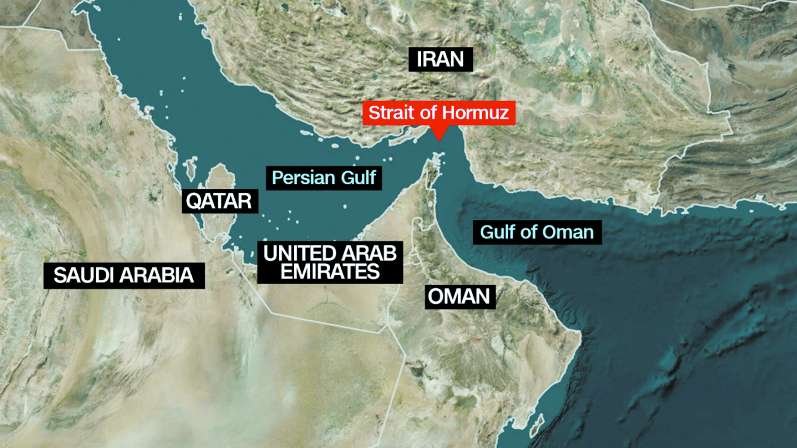
TEHRAN/WASHINGTON (MNN); Iran and Oman have reportedly reached an understanding on maps outlining the movement of ships through the strategically vital Strait of Hormuz, as Tehran prepares to announce a new restricted maritime zone near the key waterway.
Iran’s Supreme National Security Council Secretary Mohsen Rezaei said the two countries were expected to formally sign an agreement on the new shipping arrangements within the next few days.
According to Rezaei, Iran will also announce a restricted zone outside the Strait of Hormuz in the coming days. He said the proposed zone would extend from what Iran describes as the line of the US blockade towards the Gulf.
Rezaei warned that vessels entering the proposed restricted zone could be placed on a sanctions list under the new arrangements.
He had earlier said that Iran was preparing conditions for reopening the Strait of Hormuz following requests from mediators for Tehran to clarify its position. According to him, an end to the wider regional conflict was among the conditions being considered.
Meanwhile, maritime activity continued through the strategic waterway, with the United Kingdom Maritime Trade Operations Centre reporting that 59 ships had passed through the Strait of Hormuz during the previous 48 hours.
The UKMTO has assessed the threat level in the waterway as “severe,” highlighting growing concerns over maritime security in the region.
Iran has also announced that it will intensify efforts to address the economic challenges caused by US sanctions, which Tehran says have placed severe pressure on the country’s economy.
Amid heightened regional tensions, Iranian Parliament Speaker Mohammad Baqer Ghalibaf warned that any future attack against Iran’s security or national interests would receive a stronger and more immediate response.
In a statement published on his Telegram channel, Ghalibaf said the United States needed to recognise that the “rules of the game” in the conflict with Iran had changed.
“Any attack against Iran’s interests and security will receive a faster, heavier and more painful response,” he warned.
Ghalibaf said Washington should understand the changing nature of the conflict before it was too late.
The latest tensions also followed conflicting claims regarding an alleged incident involving an unmanned US military vessel in the Strait of Hormuz.
Iranian state media had reported that Iranian forces targeted a sea drone that was allegedly attempting to enter an area described by Tehran as restricted.
However, the US military strongly rejected the Iranian report.
Captain Tim Hawkins, a spokesman for US Central Command, described the claim as completely false.
The US denial came after Washington said its forces had targeted Iranian oil tankers in response to what it described as Iranian ballistic missile attacks against US Navy vessels.
The developments have further intensified concerns over security in the Strait of Hormuz, one of the world’s most strategically important maritime routes, as Iran and the United States continue to exchange allegations and warnings amid escalating regional tensions.