

ISLAMABAD (MNN); Opposition leaders on Monday strongly criticised the federal government’s decision to impose emergency and governor’s rule in Khyber Pakhtunkhwa (KP), accusing it of undermining constitutional democracy and provincial autonomy.
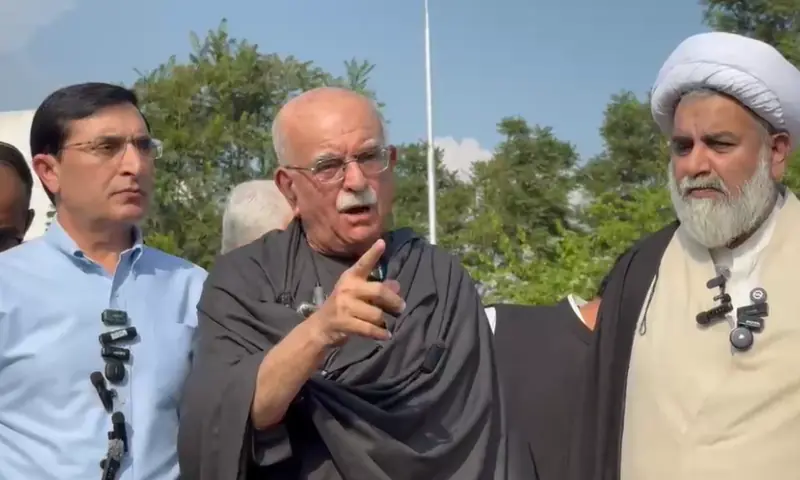
National Assembly Opposition Leader Mehmood Khan Achakzai questioned why emergency had not been imposed in Balochistan despite what he described as the absence of the state’s writ in large parts of the province. He alleged that the government was treating KP differently because Balochistan’s chief minister was politically favoured by the Centre.
Speaking outside Parliament House, Achakzai termed the October 11 decision an “assault on Pakistan’s Constitution and democracy” and called on political parties and citizens to unite in a peaceful democratic struggle against it. He said opposition parties would be urged to mobilise in areas where they had influence, while ruling out violence.
Senate Opposition Leader Raja Abbas Nasir also questioned the decision, arguing that if terrorism and the restoration of peace were the reasons for emergency rule, Balochistan should have been considered first.
Achakzai reiterated the opposition’s demand for access to jailed former prime minister and PTI founder Imran Khan, saying party leaders would disclose only information about his health if meetings were permitted. He maintained that the opposition remained open to negotiations with the government while continuing its political struggle.
PTI Chairman Barrister Gohar Khan announced that the party would challenge the imposition of emergency and governor’s rule in the Peshawar High Court on Tuesday. He said PTI would also decide on a parliamentary protest and continue raising its objections through political and legal forums.
In a separate statement, PTI Central Information Secretary Sheikh Waqas Akram described October 11 as a “black day for democracy” and rejected the removal of the elected provincial government. He accused the PML-N and PPP of supporting measures that, in the party’s view, undermine democratic principles and provincial autonomy.
Akram cited previous instances of governor’s rule and the dismissal of provincial governments in Pakistan’s political history. He warned against repeating past mistakes, arguing that national unity depended on constitutional governance, respect for electoral mandates and meaningful provincial autonomy.
The PTI leader also disputed the federal government’s justification for suspending the provincial government, maintaining that counterterrorism required coordinated national action rather than political confrontation. He called for the reversal of emergency and governor’s rule, restoration of the elected government and meaningful political dialogue.
Separately, the Khyber Pakhtunkhwa Bar Council announced a strike in court proceedings on Tuesday in protest against the federal government’s decision. It raised concerns over provincial autonomy and constitutional procedures, and called for the immediate reopening of roads to restore normal life.
The Bar Council also announced an emergency meeting for October 17 to determine its future course of action.
The federal government imposed emergency in 12 districts of KP and governor’s rule on Sunday, citing the security situation and alleged non-cooperation by the former provincial administration in the fight against terrorism. The move followed escalating tensions between the Centre and the PTI-led provincial government.