

By Irfan Malik
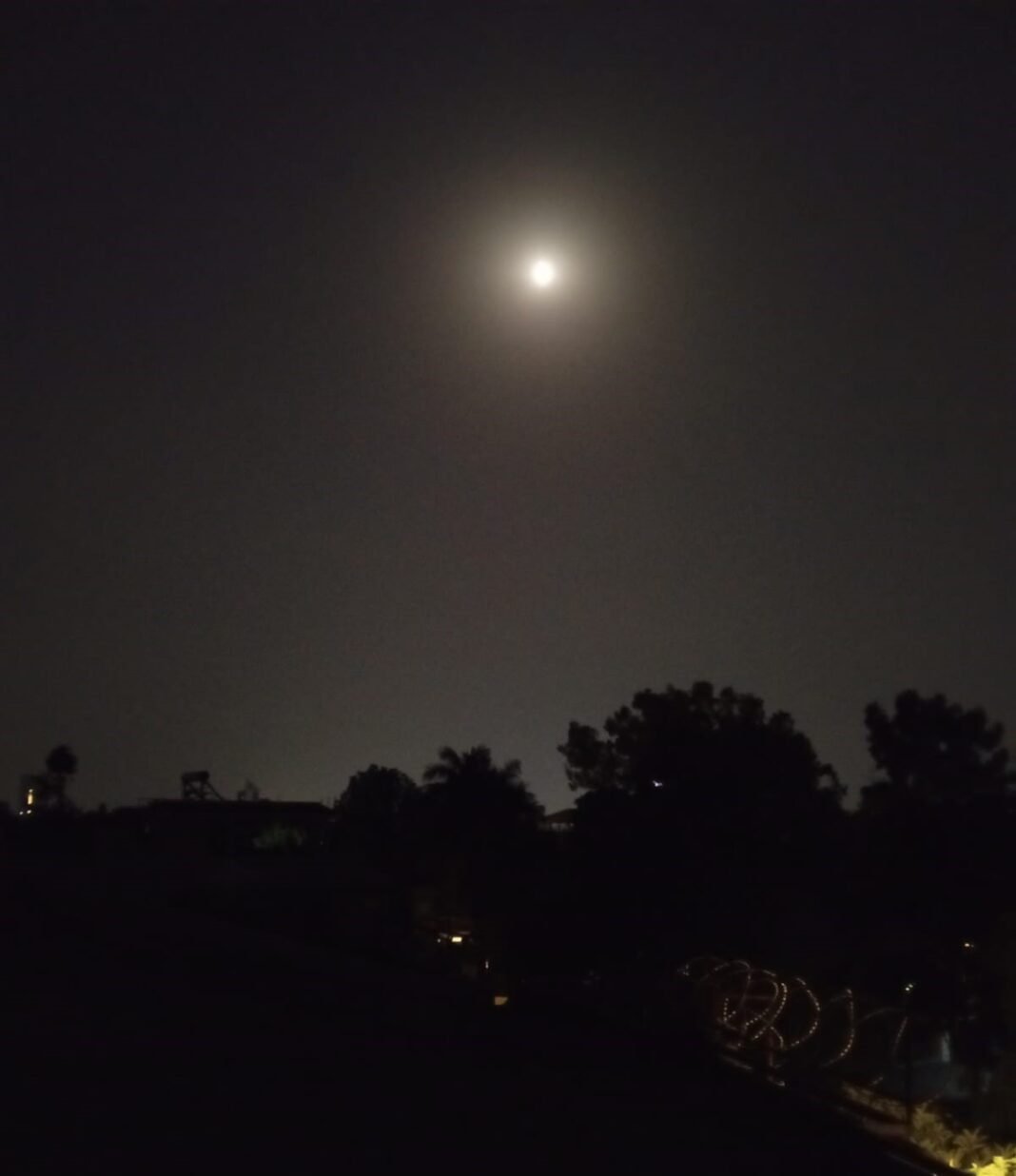
Whenever an unusual astronomical phenomenon appears in the sky, people around the world become eager to learn more about it. In recent days, social media has been flooded with claims about the “Blue Moon.” Some people suggest that the Moon has appeared unusually bright for two consecutive nights, while others link it to a rare or mysterious celestial event. The truth is that the Blue Moon is a well-known astronomical term, but it is also surrounded by many misconceptions.
What Is a Blue Moon?
First and foremost, it is important to understand that a Blue Moon does not mean that the Moon actually turns blue. Many people assume that the term refers to a change in the Moon’s color, but astronomically speaking, this is not the case.
Traditionally, a Blue Moon refers to the second Full Moon occurring within a single calendar month. Since the lunar cycle lasts approximately 29.5 days, there are occasions when a Full Moon appears at the beginning of a month and another Full Moon occurs near the end of the same month. This second Full Moon is known as a Blue Moon.
Another astronomical definition states that when a season contains four Full Moons instead of the usual three, the third Full Moon is called a Blue Moon. This definition is also recognized by some astronomical organizations in North America and Europe.
Where Did the Term “Blue Moon” Come From?
The history of the term “Blue Moon” spans several centuries. The English phrase “Once in a Blue Moon” has been used for generations to describe something that happens very rarely.
Historians note that during the 17th and 18th centuries, the term was used in various ways. Later, during the 20th century, astronomical publications and the media popularized it as a specific celestial event. Today, the Blue Moon is widely recognized as a rare but entirely natural astronomical occurrence.
Can the Moon Actually Appear Blue?
Although the term Blue Moon is not related to the Moon’s color, there are rare circumstances in which the Moon can appear bluish.
According to scientists, volcanic eruptions, large forest fires, or specific particles of dust and smoke in the atmosphere can alter the way light is scattered. As a result, the Moon may temporarily appear blue, gray, or other unusual colors.
One famous example occurred after the eruption of the Krakatoa volcano in Indonesia in 1883, when people in various parts of the world reported seeing a blue-colored Moon. However, such events are extremely rare and have no direct connection to the astronomical definition of a Blue Moon.
Why Does the Full Moon Appear Full for More Than One Night?
Many people wonder why the Full Moon often appears complete for two or even three consecutive nights.
The reason is that although the exact moment of a Full Moon lasts only an instant in astronomical terms, the human eye cannot easily distinguish between a Moon that is 98 or 99 percent illuminated and one that is 100 percent illuminated. As a result, the Moon appears fully illuminated both before and after the actual Full Moon phase.
This creates the impression that the Moon remains full and exceptionally bright for several nights in a row.
Blue Moon in Different Cultures
The Blue Moon is not only an astronomical term; it also holds symbolic significance in various cultures.
In Europe, the Blue Moon has long been associated with rarity and unusual events. The phrase frequently appears in literature, poetry, music, and films.
In the United States, the expression “Once in a Blue Moon” has become a common idiom used to describe events that occur very infrequently.
Some cultures even associate the Blue Moon with spiritual transformation, self-reflection, and new beginnings, although these beliefs are not supported by scientific evidence.
Modern Science and the Blue Moon
Modern astronomy considers the Blue Moon a completely understandable and predictable celestial event. Scientists emphasize that there is nothing mysterious or supernatural about it.
Using advanced astronomical software and modern telescopes, researchers can accurately predict Blue Moons years in advance.
The phenomenon is simply the result of the relationship between the Moon’s orbit around Earth and the structure of the calendar, rather than any extraordinary cosmic occurrence.
Social Media and Misconceptions
In the age of social media, myths and misinformation about the Blue Moon spread rapidly. Some people associate it with apocalyptic predictions, cosmic dangers, or supernatural forces, despite the absence of any scientific evidence supporting such claims.
Astronomers encourage the public to rely on reputable scientific institutions and qualified experts when seeking information about celestial events rather than believing unverified online rumors.
Conclusion
The Blue Moon is a fascinating and relatively rare astronomical event that is related to the timing and frequency of Full Moons rather than the Moon’s color. Although its name suggests a blue-colored Moon, it is actually a calendar-based and astronomical term.
For centuries, the Blue Moon has captured human imagination and influenced culture, literature, and science. Today, it serves as a reminder that many celestial phenomena may appear extraordinary at first glance, yet science provides clear and logical explanations for them.
The Blue Moon remains one of the most intriguing examples of how the wonders of the universe can inspire curiosity while deepening our understanding of the cosmos.