

Islamabad: MNN
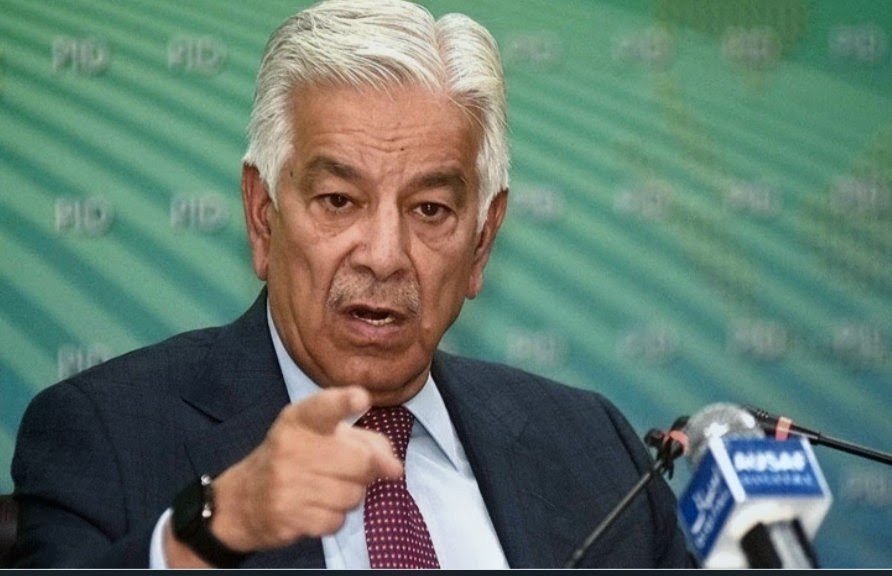
Federal Minister for Defence Khawaja Muhammad Asif, who hails from Sialkot, is regarded as one of the most controversial figures in Pakistani politics. Throughout his decades-long political career, he has remained in the spotlight because of his aggressive political style, controversial statements, and hardline political positions. Alongside holding key ministerial portfolios, his career has also been marked by various legal and political controversies. Whether inside Parliament or at public gatherings, many of Khawaja Asif’s statements have repeatedly sparked political controversy. Opposition parties and critics have objected to his style of speech and a number of his remarks, while Khawaja Asif has consistently maintained that such criticism is merely part of political rivalry.
In recent days, statements made by Interior Minister Mohsin Naqvi have intensified debate over the government’s performance. The opposition interpreted those remarks as evidence of divisions within the ruling coalition, whereas government circles rejected that perception. Amid this political environment, Khawaja Asif’s criticism of various political leaders has also continued to attract public attention.
His controversial remarks regarding women also remain part of the public record and have been widely criticized by his opponents. On several occasions, comments directed at women politicians triggered strong political reactions. He faced criticism both inside and outside Parliament, while his critics argue that instead of apologizing for what they describe as unparliamentary remarks, he continued to defend his position.
Several of Khawaja Asif’s speeches in the National Assembly and his sharp verbal exchanges with opposition lawmakers have frequently made headlines. His confrontation with MNA Sanaullah Mastikhel is among the notable incidents that turned parliamentary proceedings into a major political controversy.
His remarks concerning the military, national security, and civil-military relations have also generated political and public debate. Critics continue to refer to some of those statements, while Khawaja Asif has repeatedly defended his position regarding these issues.
During his political career, Khawaja Asif has faced legal proceedings, including the iqama (work permit) case, NAB investigations into assets beyond known sources of income, and other legal matters. His critics have questioned transparency in certain cases, while Khawaja Asif has maintained that the proceedings against him were politically motivated.
In recent days, after Interior Minister Mohsin Naqvi described the current system of governance as unsuccessful, Khawaja Asif’s response on social media also drew attention. Critics allege that instead of responding directly to Mohsin Naqvi, he targeted members of allied political parties through his public statements.
His remarks concerning Azad Jammu and Kashmir elections and the people of Kashmir have also generated political criticism. Opponents described those remarks as inappropriate and demanded action against him. Meanwhile, members of the Istehkam-e-Pakistan Party (IPP) have criticized Khawaja Asif’s recent statements regarding their leadership, describing them as an unfounded political campaign.
The current political situation appears to be creating additional challenges for Prime Minister Shehbaz Sharif. Political observers believe that Khawaja Asif’s continued verbal attacks and allegations against coalition partners could further complicate the political environment. Analysts suggest that his confrontational approach toward allies reflects growing political frustration and warn that such rhetoric from a senior cabinet minister may have negative consequences for the coalition in the near future.