


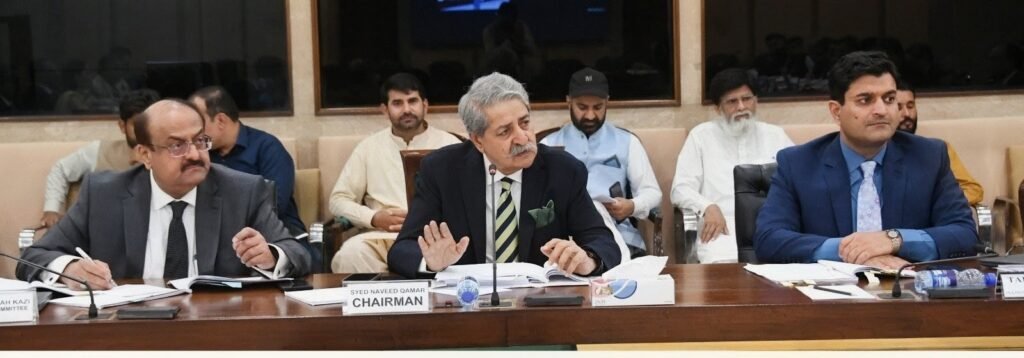
ISLAMABAD – MNN: The Standing Committee on Finance and Revenue met at Parliament House to continue its clause-by-clause review of the Finance Bill 2026, deliberating on key taxation reforms, exemptions, and fiscal policy proposals aimed at reshaping Pakistan’s revenue framework.
The Committee examined proposals related to sales tax exemptions, import regulations, income tax amendments, digital tax administration, and sector-specific concessions under the federal budget framework.
A key discussion centered on the proposed expansion of the Third Schedule of the Sales Tax Act, under which sales tax would be applied at the manufacturing stage based on printed retail prices. The Federal Board of Revenue (FBR) informed the Committee that the proposal covers 21 additional categories, including packaged foods, beverages, cosmetics, insecticides, and household goods. Members raised concerns regarding potential price increases, market distortions, and implementation challenges.
The Committee also reviewed taxation proposals for stationery items, stressing that essential educational supplies such as pencils and geometry boxes should remain exempt to avoid burdening students and families. The FBR clarified that exercise books will remain exempt, while other stationery items are proposed to be taxed at a concessional rate of 10 percent. Members directed the FBR to provide detailed revenue impact analysis before finalization.
A significant point of concern was the proposed 15-year sales tax exemption for Pakistan International Airlines (PIA) under its privatization framework. Members cautioned that granting exclusive tax concessions to a single airline could distort competition within the aviation sector. The Secretary Aviation explained that the exemption is part of the Share Purchase Agreement with prospective investors.

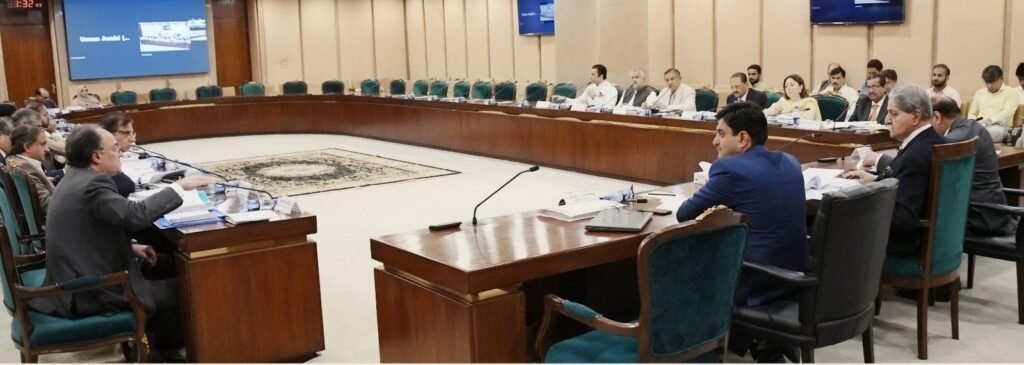
The Standing Committee emphasized that tax policy must remain sector-neutral and must not create distortions or unfair competitive advantages for any single entity. Members urged the government to review the broader sectoral implications and consider equitable measures across the aviation industry.
The Committee also discussed incentives for dredgers, tankers, and shipping vessels, with members highlighting Pakistan’s opportunity to strengthen its maritime sector and position its ports as regional trade and logistics hubs amid evolving geopolitical conditions.
Deliberations were also held on digital tax reforms, faceless assessment systems, algorithm-based settlements, and the establishment of an Independent Case Scrutiny Committee. While supporting modernization, members stressed the need for transparency, legal safeguards, and strong oversight mechanisms to protect taxpayers’ rights.
The Committee endorsed the proposal to impose tax on surrendered life insurance policies within the first four years, aimed at preventing misuse while safeguarding genuine long-term policyholders.
The Standing Committee reiterated that tax policy should encourage investment, economic growth, and competitiveness rather than focusing solely on revenue generation. Members warned that excessive taxation or sector-specific distortions could negatively impact long-term economic stability.
It further emphasized that parliamentary oversight over taxation must remain intact, opposing any move to delegate withholding tax authority to the executive.
The Committee expressed concern over the absence of comprehensive fiscal impact assessments and reiterated that evidence-based analysis is essential for informed legislative scrutiny.
The Committee will resume its deliberations on the Finance Bill 2026 in its next scheduled meeting.