

Concerns over alleged horse-trading resurface ahead of the next Senate elections
Islamabad: MNN
Islamabad: Questions over Balochistan’s representation in the Senate have begun to resurface ahead of the completion of the terms of half of the Senate members. Concerns are being raised over the regional backgrounds and political affiliations of senators elected on Balochistan’s seats, while fears of alleged horse-trading are also emerging ahead of the next Senate elections.
According to the Senate of Pakistan’s records, Balochistan has 23 Senate seats, represented by members of various political parties as well as independent senators. These include the Pakistan Peoples Party Parliamentarians (PPPP), Jamiat Ulema-e-Islam (JUI-F), Pakistan Muslim League-Nawaz (PML-N), Balochistan Awami Party (BAP), Awami National Party (ANP) and National Party.
The debate over Balochistan’s representation has gained significance as questions arise about the personal and ancestral backgrounds of some senators elected from the province.
The senators elected on Balochistan’s seats include Abdul Quddus Bizenjo, Abdul Shakoor Khan, Maulana Abdul Wasay, Agha Shahzaib Durrani, Ahmed Khan, Aimal Wali Khan, Anwaar-ul-Haq Kakar, Asad Qasim, Bilal Ahmed Khan, Dinesh Kumar, Hasna Bano, Jan Muhammad, Kamran Murtaza, Manzoor Ahmed, Mir Dostain Khan Domki, Muhammad Abdul Qadir, Naseema Ehsan, Rahat Jamali, Saeed Ahmed Hashmi, Samina Mumtaz Zehri, Sardar Haji Muhammad Umar Gorgage, Sayedal Khan and Umar Farooq.
In terms of political affiliations, Abdul Quddus Bizenjo, Bilal Ahmed Khan, Hasna Bano and Sardar Haji Muhammad Umar Gorgage are associated with the Pakistan Peoples Party Parliamentarians. Abdul Shakoor Khan, Maulana Abdul Wasay, Ahmed Khan and Kamran Murtaza belong to Jamiat Ulema-e-Islam.
The Pakistan Muslim League-Nawaz is represented by Agha Shahzaib Durrani, Mir Dostain Khan Domki, Rahat Jamali and Sayedal Khan Nasar. Dinesh Kumar, Manzoor Ahmed, Saeed Ahmed Hashmi and Samina Mumtaz Zehri were elected on Balochistan Awami Party tickets. Aimal Wali Khan belongs to the Awami National Party, while Jan Muhammad is associated with the National Party. Anwaar-ul-Haq Kakar, Asad Qasim, Muhammad Abdul Qadir and Naseema Ehsan are listed as independent senators, while Umar Farooq is also listed in the official record as affiliated with the Awami National Party.
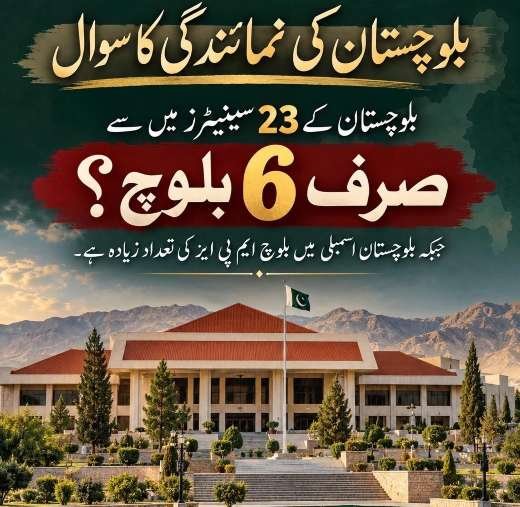
Meanwhile, debate continues over the regional and ancestral backgrounds of certain senators elected from Balochistan. Aimal Wali Khan is associated with Charsadda in Khyber Pakhtunkhwa, while claims regarding links to Sindh have also been raised in relation to Samina Mumtaz Zehri and Hasna Bano. Saeed Ahmed Hashmi and Muhammad Abdul Qadir have also been described as having links to Punjab. These claims require independent verification through reliable sources.
A review of the figures has prompted questions about the distinction between senators elected to represent Balochistan and those whose personal or ancestral roots lie in the province. The claim that only six of the 23 senators have roots in Balochistan requires further verification against reliable records.
Political observers have raised concerns that candidates from outside the province may use financial influence to persuade members of the Balochistan Assembly to vote for them. With the next Senate elections approaching in the coming months, concerns about political bargaining, pressure on provincial lawmakers and alleged vote-buying are once again entering the debate.
Members of the Balochistan Assembly face an important responsibility to protect the province’s interests and ensure that their votes reflect the public interest rather than private financial incentives. Preventing alleged vote-buying and ensuring transparency and merit in the electoral process are considered important steps towards addressing the sense of deprivation in Balochistan.
Political circles are questioning whether local political representatives will receive greater priority in the upcoming Senate elections or whether candidates with greater financial resources will again influence the electoral process.
Political analysts say concerns over political manoeuvring, pressure on assembly members and alleged horse-trading may intensify as the next Senate elections draw closer. However, allegations of vote-buying must be supported by credible evidence before being treated as established facts.
The central question remains how genuine local representation in the Senate can be ensured and what measures political parties will take to prevent financial influence and alleged horse-trading during the electoral process.
Ensuring effective representation for the people of Balochistan, safeguarding the province’s rights and maintaining transparency in Senate elections remain important responsibilities for political parties, members of the provincial assembly and the relevant electoral authorities.