


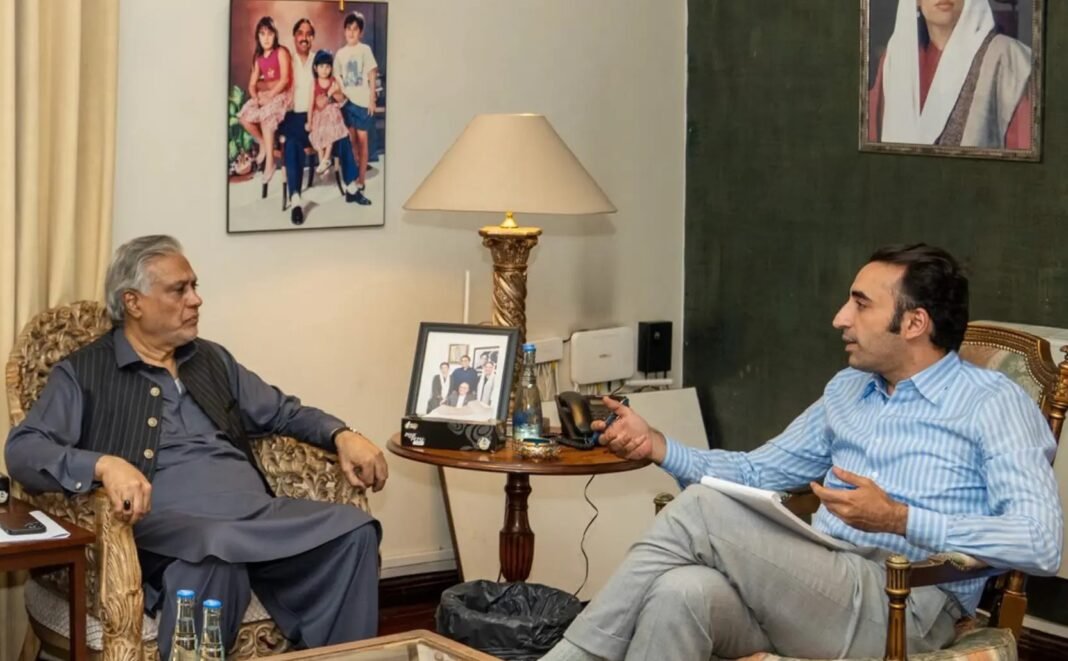
ISLAMABAD (MNN); A high-level Pakistan Peoples Party (PPP) delegation led by Chairman Bilawal Bhutto Zardari on Sunday raised concerns over proposed taxation measures during a pre-budget meeting with Deputy Prime Minister and Foreign Minister Ishaq Dar ahead of the federal budget for fiscal year 2026-27.
According to sources, the meeting was held at Zardari House in Islamabad and focused on key budgetary matters, including taxation policies, development spending, revenue targets and broader economic priorities.
A statement issued by the PPP said the meeting was attended by Bilawal Bhutto Zardari, Sherry Rehman, Naveed Qamar, Sindh Chief Minister Murad Ali Shah and Jam Khan Shoro.
The discussions covered the upcoming federal budget, government expenditures, the Public Sector Development Programme (PSDP), fiscal sustainability, public welfare initiatives and strategies aimed at promoting inclusive economic growth.
With the federal budget scheduled to be presented on June 10, the meeting marked the second round of consultations between the ruling coalition partners, Pakistan Muslim League-Nawaz (PML-N) and PPP. A final round of talks is expected to take place before the budget announcement.
Sources familiar with the discussions said Ishaq Dar assured the PPP delegation that its recommendations and concerns would be taken into consideration during the finalisation of the budget.
According to insiders, the PPP reiterated concerns raised in earlier meetings regarding pressure on provinces to significantly increase revenue collection in order to meet conditions agreed with the International Monetary Fund (IMF).
Under the IMF programme, the federal government is reportedly required to introduce additional revenue measures worth approximately Rs430 billion in the upcoming budget, while the four provinces are also expected to generate a similar amount through enhanced revenue efforts.
During Sunday’s meeting, PPP representatives reportedly sought clarity on how provincial governments could realistically increase their revenues without placing additional burdens on ordinary citizens.
A senior PPP leader said the party was engaged in ongoing discussions with the PML-N leadership to develop a consensus on fiscal measures in light of IMF requirements.
The leader acknowledged that the party was dissatisfied with certain aspects of the budget currently under consideration, particularly proposals that could place additional tax burdens on already taxed segments of society.
According to party representatives, the government should focus on expanding the tax net and bringing untaxed sectors into the formal economy instead of repeatedly imposing taxes on existing taxpayers.
Sources said revenue generation and expenditure management remained the central themes of the discussions.
Officials familiar with the talks indicated that the IMF has set strict macroeconomic targets for the upcoming budget, including goals related to revenue collection and maintaining a primary fiscal surplus.
One source described the IMF’s expectations from provincial governments as unprecedented, noting that provinces have also been assigned specific revenue targets under the current programme.
PPP leaders later told journalists that they opposed the imposition of fresh taxes on the public and hoped the government would adopt a more balanced taxation strategy aimed at providing relief to citizens already struggling with inflation and rising living costs.
The party maintained that sustainable economic growth could only be achieved through a fair tax system, wider documentation of the economy and equitable distribution of the tax burden across all sectors.