


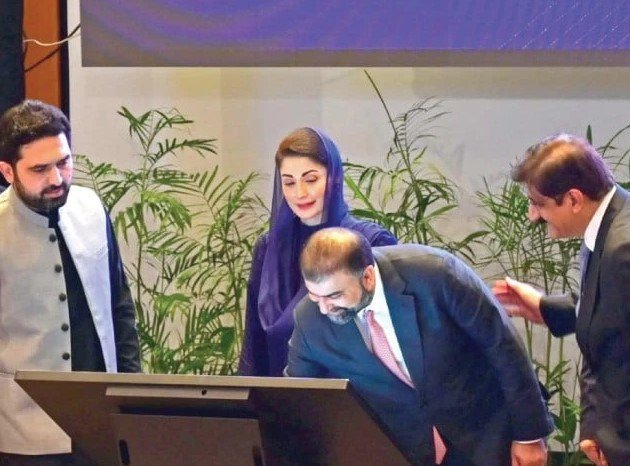
ISLAMABAD (MNN); A national conference convened to chart a roadmap for reforming Pakistan’s overcrowded prison system took an unexpected political turn on Thursday, as the chief ministers of Punjab and Khyber Pakhtunkhwa used the platform to highlight the plight of political prisoners while reaffirming their commitment to improving prison conditions across the country.
Held under the auspices of the National Judicial (Policy Making) Committee (NJPMC) at the Supreme Court of Pakistan, the conference concluded with the unanimous adoption of the Islamabad Declaration on Prison Reform, a comprehensive pledge by all four provincial governments to modernize prison administration, reduce overcrowding, strengthen rehabilitation programmes, and improve the protection of prisoners’ fundamental rights.
Addressing the conference, Chief Justice of Pakistan Yahya Afridi described prisons as a mirror of the country’s criminal justice system and stressed that meaningful reform could only be achieved through coordinated efforts among the judiciary, executive and provincial governments.
He welcomed the collective commitment shown by the provinces to implement the National Prison Reform Action Plan, emphasizing that sustainable reforms require political will, institutional coordination and continuous leadership.
Despite the conference’s focus on prison reform, discussions frequently shifted towards political incarceration, with both Punjab Chief Minister Maryam Nawaz and Khyber Pakhtunkhwa Chief Minister Sohail Afridi recounting personal and political experiences related to imprisonment.
Maryam Nawaz Recalls Solitary Confinement
Punjab Chief Minister Maryam Nawaz delivered one of the most emotional speeches of the conference, saying her own imprisonment had profoundly influenced her understanding of prison reforms.
She recalled spending 24 hours in solitary confinement at Adiala Jail during the previous Pakistan Tehreek-e-Insaf (PTI) government, describing the experience as mentally exhausting and psychologically traumatic.
“Only those who have lived behind prison walls can truly understand the pain, helplessness and isolation endured by inmates,” she remarked.
Maryam said she and her father, former Prime Minister Nawaz Sharif, were imprisoned simultaneously while her mother was seriously ill. She recalled that despite repeated requests, neither of them was allowed to meet her during her final days.
“We were unable to sit beside her, hold her hand or comfort her before she passed away. That remains one of the deepest pains of my life,” she said.
The Punjab chief minister also narrated another incident from her imprisonment when her blood sugar dropped sharply but no assistance arrived.
“My hands were trembling. A bottle of jaggery slipped from my hands, shattered on the floor, and I had no option but to collect the pieces from the ground to regain my strength,” she recalled.
Describing prison conditions, she said the cell lacked even the most basic privacy.
“There was a washroom inside the room without any partition. I could not even determine where to spread my prayer mat.”
Maryam said those experiences permanently changed her perspective and motivated her government to prioritize prison reforms after assuming office.
Punjab Announces Modern Prison Reforms
Highlighting measures introduced by the Punjab government, Maryam Nawaz said every prison in the province has now been equipped with modern communication and emergency response facilities.
She announced that inmates can now communicate with their families through secure video-link facilities while audio and video calling systems have also been introduced.
Emergency panic buttons have been installed in prison cells to enable prisoners to seek immediate assistance during medical or security emergencies.
“Human life cannot wait behind locked doors,” she observed, stressing that emergency response systems are essential for ensuring prisoners’ safety and dignity.
Maryam noted that Punjab currently operates 45 prisons housing more than 69,000 inmates, despite an authorised capacity of approximately 39,000 prisoners, highlighting the severity of overcrowding.
She said nearly three-fourths of the prison population consists of under-trial prisoners, demonstrating that prison reforms cannot succeed without broader criminal justice reforms aimed at speeding up investigations, trials and bail procedures.
The Punjab chief minister also emphasized the need for mental health counselling, rehabilitation programmes, vocational education and skill development, arguing that every prisoner deserves an opportunity to rebuild their life after completing their sentence.
KP Chief Minister Raises Imran Khan’s Case
While supporting prison reforms, Khyber Pakhtunkhwa Chief Minister Sohail Afridi shifted attention towards the imprisonment of former Prime Minister Imran Khan.
Addressing Chief Justice Yahya Afridi directly, he requested judicial attention to what he described as the deteriorating health condition of the PTI founder.
Afridi claimed that approximately 85 percent of vision in one of Imran Khan’s eyes had been affected and urged authorities to allow the former premier access to his personal doctors.
He also requested that Imran Khan be permitted regular meetings with family members and be allowed to communicate with his sons through video-link facilities.
The KP chief minister appealed for improved arrangements for PTI supporters visiting Adiala Jail, suggesting that waiting areas similar to those being established outside prisons in Khyber Pakhtunkhwa should also be constructed there.
He further urged authorities to avoid using water cannons against the sisters of Imran Khan or other visitors during prison visits.
Afridi maintained that constitutional guarantees should be fully implemented across the country, saying Pakistan’s Constitution remains the foundation of national unity and democratic governance.
He also criticized restrictions on public assemblies and expressed concern over the registration of terrorism-related cases against PTI supporters, including minors.
According to Afridi, prison reforms should begin with Adiala Jail as a demonstration of equal treatment and constitutional justice.
Balochistan Calls for Human-Centred Reforms
Balochistan Chief Minister Sarfraz Bugti focused his address on prisoners’ rights, describing humane treatment as an essential component of a modern justice system.
He said protecting prisoners’ constitutional rights remains the state’s responsibility and argued that prison reforms should go beyond physical infrastructure.
Bugti stressed the importance of education, vocational training, psychological rehabilitation and social reintegration programmes that could help former prisoners return to society as productive citizens.
He maintained that strengthening rehabilitation would ultimately contribute to public safety by reducing repeat offences and improving reintegration into communities.
Islamabad Declaration Unanimously Adopted
The conference concluded with the adoption of the Islamabad Declaration on Prison Reform, read out by Federal Law Minister Azam Nazeer Tarar.
The declaration acknowledged that Pakistan’s prisons face multiple structural challenges, including severe overcrowding, inadequate infrastructure, poor healthcare facilities, insufficient mental health services and limited opportunities for education and rehabilitation.
It reaffirmed that all persons deprived of liberty retain their constitutional rights, including the rights to dignity, fair trial, humane treatment and protection under the Constitution of Pakistan.
The declaration also recognised Pakistan’s obligations under international human rights conventions governing the treatment of prisoners, women in detention, juveniles, persons with disabilities and the use of non-custodial alternatives.
The four provincial governments pledged to work jointly to reduce unnecessary incarceration, particularly of under-trial prisoners, through improved bail mechanisms, legal aid, probation, parole and other alternatives to imprisonment.
They further committed to investing in prison infrastructure, healthcare services, sanitation, nutrition, complaint redressal systems and safeguards against torture and ill-treatment while expanding education, vocational training, psychosocial support, drug rehabilitation and post-release reintegration programmes.
The declaration also called for stronger coordination among police, prosecution departments, prison authorities, probation services, legal aid institutions, health departments, social welfare agencies and the judiciary to improve case management and accelerate access to justice.
Provincial implementation mechanisms will also be established to monitor progress, allocate resources, develop time-bound reform plans and regularly report on improvements in prison conditions and rehabilitation outcomes.