


LAHORE (MNN); Interior Minister Mohsin Naqvi has said that new administrative units or provinces in Pakistan can only be created with public support, stressing that no individual, political party or government can impose such a decision.
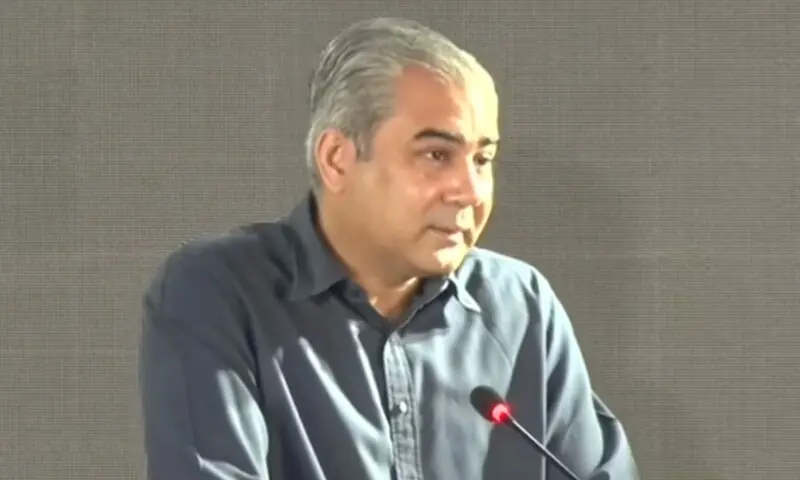
Addressing the National Policy Dialogue in Lahore on Saturday, Naqvi said that “resetting” the governance system did not mean dismantling it, but rather correcting its weaknesses and improving its effectiveness.
He said any major administrative reform must be carried out through political consensus, within the Constitution and by democratic means. Parliament, experts and relevant stakeholders should debate the issue before a detailed proposal is presented to the public for approval.
Naqvi said the number of new administrative units, their territorial boundaries, benefits, implementation methods and financial consequences must all be carefully examined.
He clarified that his earlier remarks were not directed against any particular political party but concerned the governance system that has existed since Pakistan’s independence.
The interior minister said the country’s administrative structure had lost much of its effectiveness and was failing to adequately deliver services to the public. He pointed to shortcomings in education, access to clean drinking water and the large number of pending court cases as evidence of the need for reform.
He said four out of every 10 children were not receiving the required education, only 55 per cent of the population had access to clean drinking water, and nearly two million cases were pending before the courts.
Naqvi said the purpose of administrative reforms was to improve governance and ensure that the benefits of the state reached ordinary citizens.
Calling himself a strong supporter of making Islamabad a province, he said the federal capital should also receive its share under the National Finance Commission (NFC) Award. He argued that provincial status could provide Islamabad’s residents with greater rights and resources.
He also called for a review of the existing population-based distribution formula for NFC resources, saying governance policies must be assessed according to their actual results.
Referring to New York City Mayor Zohran Mamdani, Naqvi said local leadership was often better placed to understand citizens and address their problems.
He assured the public that administrative reforms would not affect ethnic, cultural or regional identities.
“A Sindhi will remain Sindhi and a Punjabi will remain Punjabi,” he said, stressing that the proposed changes were aimed at improving governance rather than altering identities.
Naqvi said the debate should not be driven by ethnic, tribal or regional divisions. Instead, its focus should be on building an efficient system, empowering citizens and bringing government closer to the people.
Concluding his address, he reiterated that no change would be made against the will of the people and that all political parties would need to deliberate on the matter.
“If this is what the public wants, then it will happen,” he said.
In July, Naqvi had proposed a national dialogue on governance reforms, including the possibility of new provinces. His remarks subsequently triggered a nationwide debate, drawing differing responses from political parties, provincial leaders, lawyers and nationalist groups.