

Islamabad (MNN):
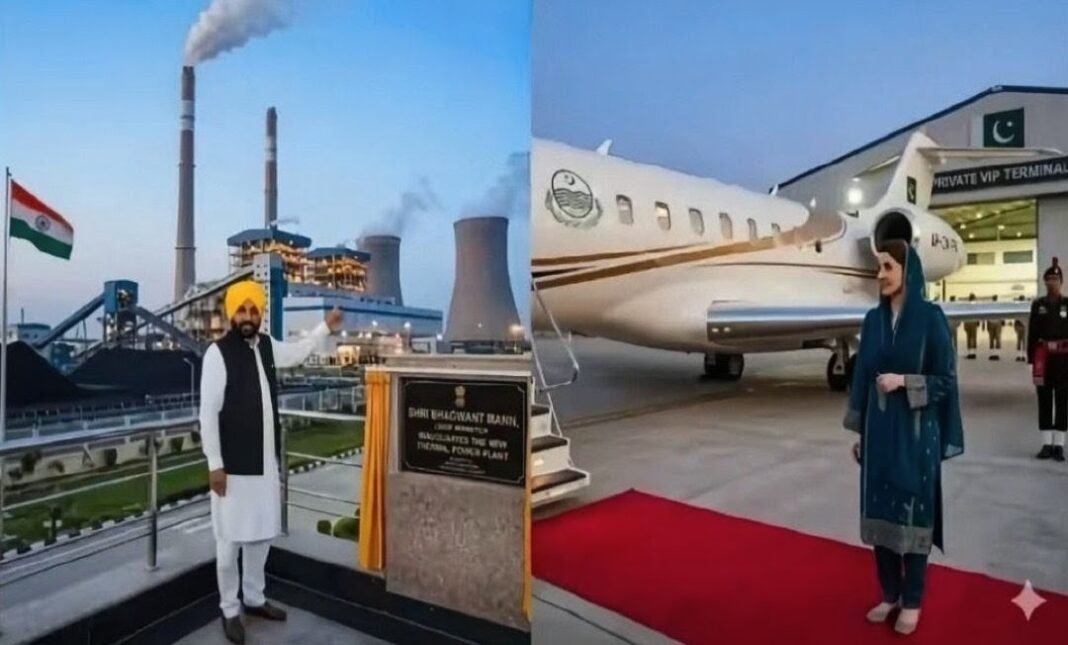
A debate over public spending priorities has gained momentum after two high-profile decisions in the Punjabs of Pakistan and India.
On one side, the Punjab government in Pakistan has come under scrutiny over the purchase of a government aircraft worth billions of rupees. On the other, the Punjab government in India has drawn attention after launching a thermal power project reportedly valued at around Rs11 billion.
The contrasting decisions have sparked widespread discussion on social media and in political circles, raising a key question: Should public resources be directed toward administrative facilities or development projects that directly benefit citizens?
The Indian Punjab government says the new thermal power project is aimed at increasing electricity generation, strengthening the power grid, and meeting the province’s future energy needs.
Meanwhile, the Punjab government in Pakistan maintains that the government aircraft is an administrative necessity. According to the official position, it will facilitate rapid travel for the Chief Minister and other officials during emergencies, natural disasters, and visits to remote areas.
Critics, however, argue that at a time of economic challenges, public funds should be prioritised for sectors that directly improve people’s lives, including electricity, healthcare, education, and job creation.
Supporters of the aircraft purchase contend that efficient governance requires modern administrative resources and quick mobility for senior government officials. Opponents view the issue as one of public spending priorities and accountability.
The debate, therefore, extends beyond the comparison of two projects. It reflects two different approaches to governance and the allocation of public resources.
Ultimately, it is for the public to decide which priorities they believe best serve their interests. However, any such debate should be based on verified facts and credible information rather than assumptions or social media narratives.