

Usman Khan
Islamabad: Pakistan’s automotive sector is entering a new era marked by increased investment, technological innovation, and sustainable mobility solutions. Since the establishment of the Special Investment Facilitation Council (SIFC), significant progress has been made in attracting investment, facilitating policy reforms, and promoting industrial growth, positioning Pakistan as an emerging automotive market in the region.
Over the past three years, several key reforms have been introduced with the support of SIFC, among which the Electric Vehicle (EV) Policy stands out as a major milestone. Industry experts believe that the policy has not only accelerated innovation within the automotive sector but has also placed Pakistan on the path toward a greener and more sustainable transportation system. The policy encourages local manufacturing of electric vehicles, development of charging infrastructure, and adoption of advanced technologies.
SIFC’s facilitation and business-friendly environment have helped restore investor confidence, making Pakistan an increasingly attractive destination for global automotive companies. As a result, leading international brands are expanding their footprint in the country and introducing modern vehicle technologies. Global and Chinese automotive brands, including BYD, GAC, Changan, Denza, Omoda, and Jaecoo, are entering the Pakistani market with new investments and innovative models, offering consumers a wider range of advanced mobility options.
Another significant development for Pakistan’s automotive industry is the partnership between Lucky Motor Corporation and Guangzhou Automobile Group. The collaboration is being viewed as a strong vote of confidence in Pakistan’s economic potential and industrial capabilities. Experts believe such partnerships will strengthen local manufacturing, facilitate technology transfer, enhance workforce skills, and create new employment opportunities.
With SIFC’s support, Pakistan’s automotive sector is gradually transitioning from traditional manufacturing to modern and environmentally friendly mobility solutions. Increased focus on electric vehicles, hybrid technologies, and smart transportation systems reflects the industry’s commitment to future mobility trends. This transition is expected to reduce fuel import costs while contributing to environmental sustainability and lower carbon emissions.
Pakistan’s automotive industry currently possesses an annual production capacity of approximately 500,000 units, providing the potential to meet domestic demand while expanding export opportunities. Through a new auto policy, refurbishment export models, and initiatives aimed at integrating Pakistan into the global automotive value chain, efforts are underway to align the industry with international standards.
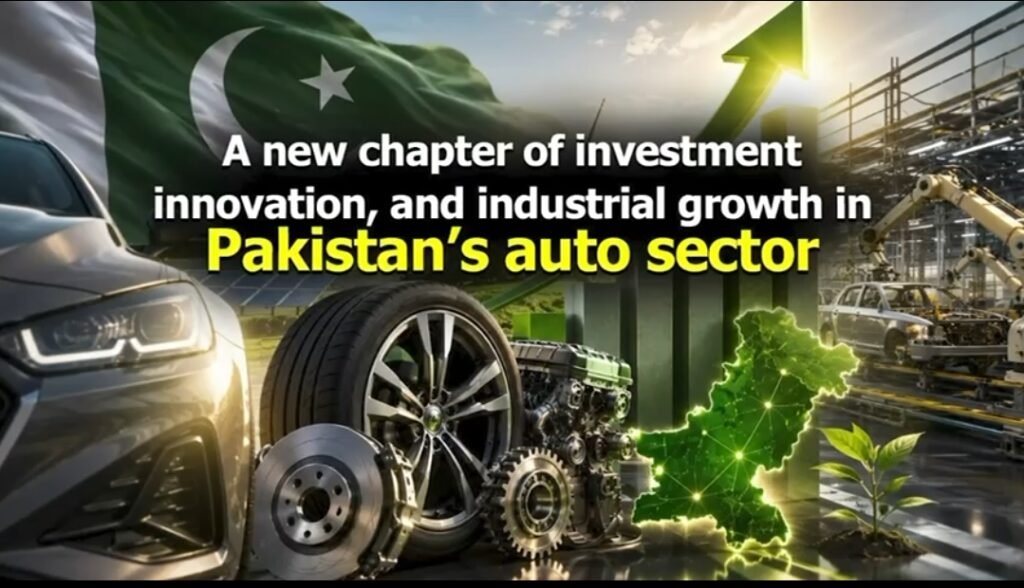
Industry analysts believe that if the current momentum continues, Pakistan has the potential to emerge not only as a major automotive market in the region but also as a hub for the production of electric and advanced vehicles. The combination of investment, technology, and policy stability has ushered the automotive sector into a new phase of growth, with positive implications for the economy, employment generation, and industrial development.
As global automotive trends increasingly shift toward sustainable mobility, Pakistan appears well-positioned to capitalize on new opportunities, attract foreign investment, and strengthen its role in the rapidly evolving automotive landscape.
Headline: Pakistan’s Auto Sector Enters a New Era of Investment, Innovation, and Industrial Growth
Subheading: SIFC-backed reforms, EV policy initiatives, and growing interest from global automakers are driving the transformation of Pakistan’s automotive industry.