


Muhammad Aurangzeb terms privilege motion misleading, highlights economic stability, tax reforms and Pakistan’s role in bringing rivals to the negotiating table
Islamabad: MNN
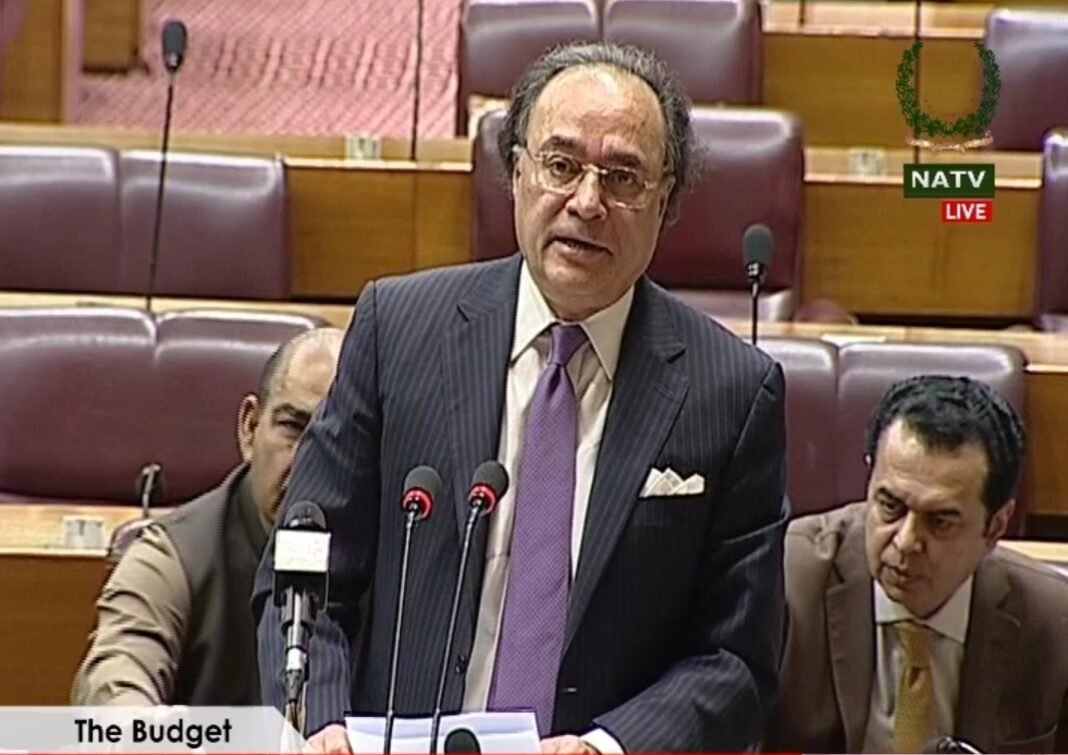
Finance Minister Muhammad Aurangzeb has rejected allegations of discrepancies in the budget documents, saying that the privilege motion submitted against him is based on a misinterpretation of facts and economic data. He also described Pakistan’s recent diplomatic efforts in facilitating dialogue between two rival countries as a historic achievement for regional and global peace.
Speaking in the National Assembly during the budget debate, Aurangzeb said that Gross Domestic Product (GDP) figures and other key economic indicators are compiled by the National Accounts Committee in consultation with provincial governments and relevant institutions. Therefore, he said, claims of inconsistencies in the budget documents are unfounded.
The finance minister noted that Pakistan’s economy is projected to reach $452 billion in fiscal year 2026, adding that all economic estimates have been prepared using census data, population statistics and other verified sources.
Highlighting Pakistan’s diplomatic engagement, Aurangzeb remarked that “the dove of peace has begun to fly again,” saying the country had succeeded in bringing two rival states to the negotiating table after four decades, enhancing Pakistan’s stature at both regional and international levels.
He congratulated Prime Minister Shehbaz Sharif, the Deputy Prime Minister, Field Marshal Syed Asim Munir, coalition partners, opposition parties and the entire nation for what he termed a landmark diplomatic accomplishment.
On the economic front, the minister said Pakistan’s stabilization policies have yielded positive results, with the country posting a current account surplus, witnessing growth in exports and recording a 20 percent increase in IT exports.
Aurangzeb said the government has initiated fundamental tax reforms and is introducing a faceless tax administration system aimed at eliminating direct interaction between taxpayers and tax officials to improve transparency and efficiency.
He further stated that the government generated an additional $14 billion in revenues over the past two years, calling it the most significant achievement since 1988.
To support the agriculture sector, the government plans to provide Rs300 billion in interest-free loans benefiting approximately 750,000 small farmers. In addition, Rs1.7 billion has been allocated for crop insurance schemes, while Rs7 billion has been earmarked for agricultural cold storage projects.
The finance minister said tax relief has been extended to salaried individuals, duties on life-saving medicines have been reduced, and several incentives have been introduced for the housing and construction sectors. He added that most recommendations proposed by parliamentary standing committees are being incorporated into the budget.
Concluding his remarks, Aurangzeb thanked members of parliament, the opposition leader, the Senate chairman, parliamentary committees, the media, economists and chambers of commerce for their input, saying the budget is increasingly being viewed as a balanced fiscal framework both inside and outside parliament. He also expressed gratitude to Prime Minister Shehbaz Sharif, Nawaz Sharif, Bilawal Bhutto Zardari, Khalid Magsi and coalition allies for their continued support.