

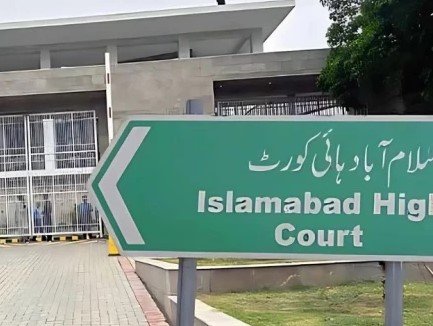
ISLAMABAD (MNN); The Islamabad High Court (IHC) on Friday suspended the Election Commission of Pakistan’s (ECP) schedule for local government elections in the federal capital, which were due to be held on December 20, and directed the commission and other respondents to submit their replies by November 26.
Justice Umer Majeed Malik issued the stay order while hearing a petition filed by citizen Amjad Ali through his counsel, Adil Aziz Qazi, challenging the election schedule over objections to the delimitation of constituencies.
In its written order, the court accepted the petitioner’s request to suspend the election programme and also stayed the ECP notification issued on October 21.
During the hearing, the petitioner’s counsel argued that the delimitation exercise had been conducted under legislation that was no longer in force, raising legal questions over the validity of the election schedule.
He informed the court that the Islamabad Capital Territory Local Government Ordinance 2026 had introduced three town corporations and increased the number of union councils from 125 to 130. The ordinance had also replaced the previous system of dividing each union council into nine wards with a new delimitation framework based on census blocks.
According to the court’s written order, the ECP had issued the final list of 130 union councils on October 14.
The petitioner’s counsel argued that the ordinance had ceased to remain effective under Article 89 of the Constitution following the expiry of its 120-day extension, thereby restoring the Islamabad Capital Territory Local Government Act 2015.
After the restoration of the 2015 legislation, the ECP decided on October 21 to conduct local government elections under the previous law and issued the election schedule on the same day.
However, the petitioner maintained that the commission had not carried out the delimitation of 125 union councils into nine wards each or determined the boundaries of the Metropolitan Corporation, as required under the restored legislation.
He contended that the delimitation conducted under the amended ordinance could not form the legal basis for elections under the restored 2015 Act.
The counsel argued that fresh delimitation and preparation of electoral rolls under the Local Government Act 2015 and the Elections Act were essential before holding the polls.
He further maintained that conducting elections without completing the legally required delimitation process would violate Article 218(3) of the Constitution, the Local Government Act 2015 and the Elections Act, besides causing unnecessary expenditure of public funds.
The court order also noted the petitioner’s argument that the ECP was constitutionally and legally responsible for ensuring free, fair and transparent elections.
The court issued notices to the ECP and other respondents, directing them to submit their responses by November 26. Further proceedings were adjourned until the same date.
Repeated Changes in Local Government Laws Delay Islamabad Polls
The latest legal challenge comes amid repeated changes to Islamabad’s local government structure, which have disrupted the electoral process on several occasions.
The last local government elections in the federal capital were held in 2015, while the tenure of the elected local government expired in February 2021. Since then, the ECP has conducted delimitation exercises six times and issued election schedules on four occasions.
In December 2025, the commission announced a schedule for local government elections, fixing February 15, 2026, as the polling date. However, the process was disrupted in January after President Asif Ali Zardari promulgated the Islamabad Capital Territory Local Government (Amendment) Ordinance 2026.
The ordinance replaced the Metropolitan Corporation structure with three town corporations and introduced changes to the composition of union councils and their delimitation.
The ECP subsequently withdrew the election programme, maintaining that changes to the local government structure and electoral framework required a fresh electoral process.
Under the amended framework, the commission initiated a fresh delimitation exercise on July 21. However, it said it was awaiting official notifications specifying the boundaries of the three town corporations, the number of union councils in each and updated maps showing census blocks.
The ECP had also approached the Ministry of Interior and the Islamabad chief commissioner for the required documents. On July 20, it submitted its recommendations on the draft Islamabad Local Government Rules to the ministry, proposing that the legislation and rules be finalised in accordance with its suggestions.
The National Assembly’s Standing Committee on Interior approved the proposed legislation on September 3. However, the ordinance expired on September 6 before replacement legislation could be enacted.
The Ministry of Law and Justice subsequently returned the draft rules to the Ministry of Interior, stating that there was no legal authority to frame rules under an ordinance that had lapsed.
The ECP later summoned the interior secretary and Islamabad chief commissioner for a hearing on October 21 to explain the delay and assist the commission in determining how the elections could proceed.
At the hearing, the commission decided to conduct the elections under the Islamabad Capital Territory Local Government Act 2015, which had become effective again following the expiry of the ordinance.
The ECP maintained that the absence of replacement legislation required it to proceed under the existing law and that the completed delimitation exercise would not affect the conduct of elections under the 2015 Act.
The commission subsequently issued a fresh election schedule, fixing December 20 as polling day. The IHC’s latest interim order has now suspended that schedule pending further proceedings.